Active Project Work Continues at the Workshop in Cyprus
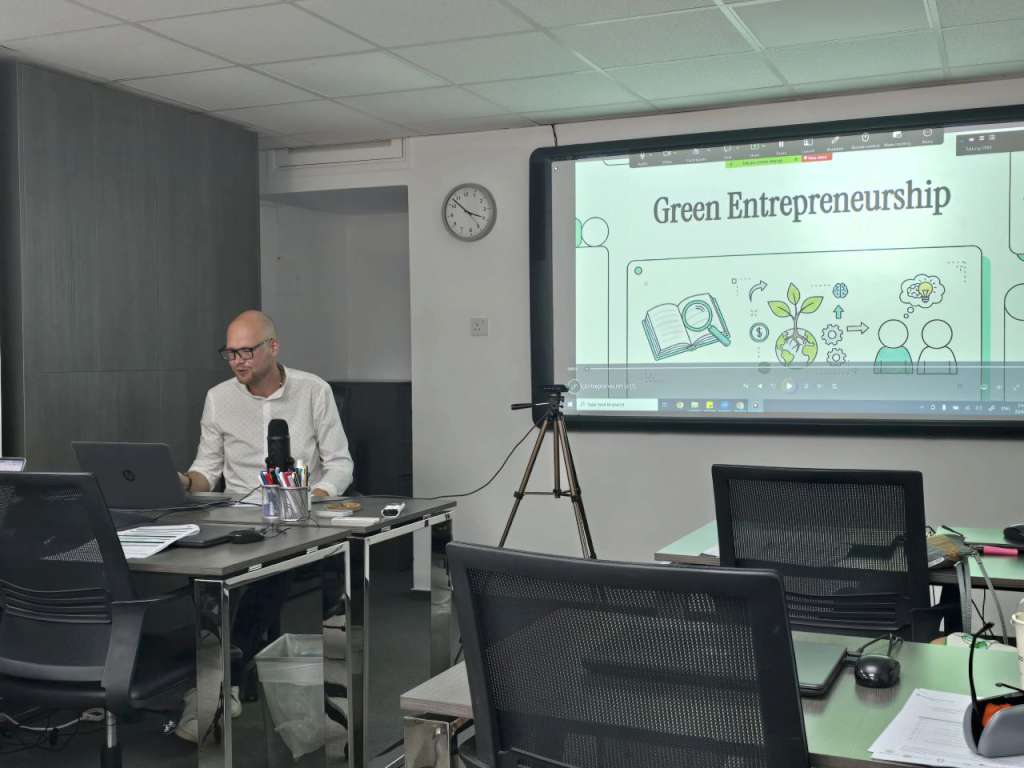
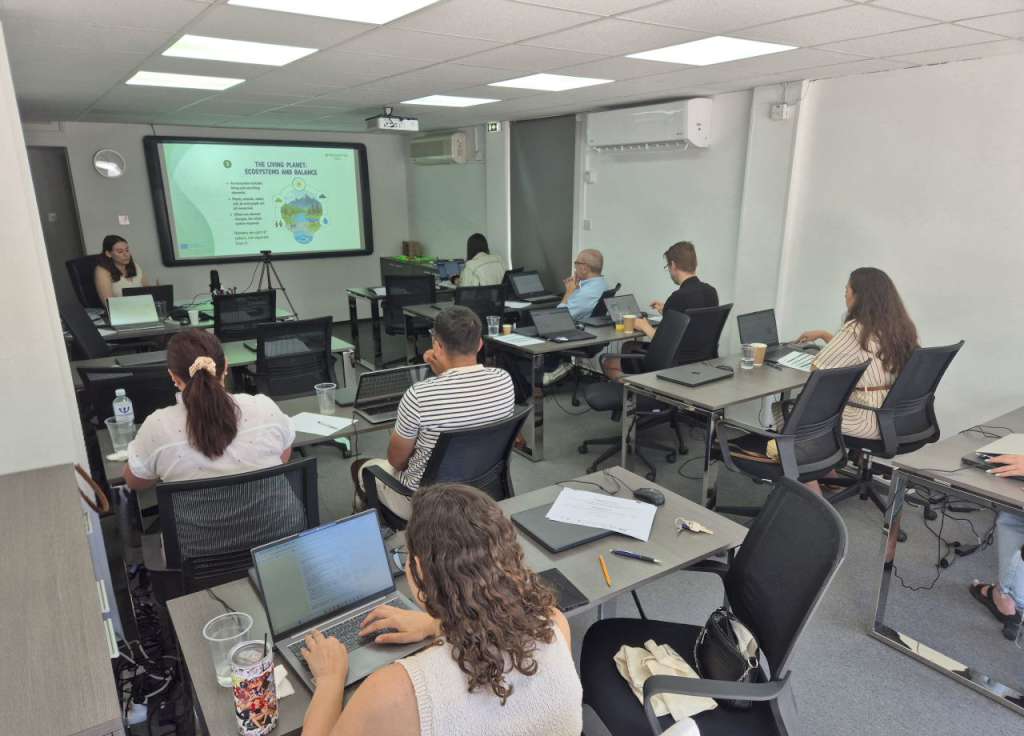
On 30 June and 1 July 2026, international partners of the GREENENTRE4DEAF project from Spain, Greece, Italy, Latvia, Cyprus and Lithuania gathered in Nicosia, Cyprus, for a workshop aimed at advancing the implementation of the project.
On the first day, the Green Entrepreneurship Sign Language Competence Framework platform was presented, its functionalities were tested, and its modules were evaluated. Participants also discussed green entrepreneurship, the fundamentals of environmental science, business development, support for deaf entrepreneurs, and the Living Lab methodology.
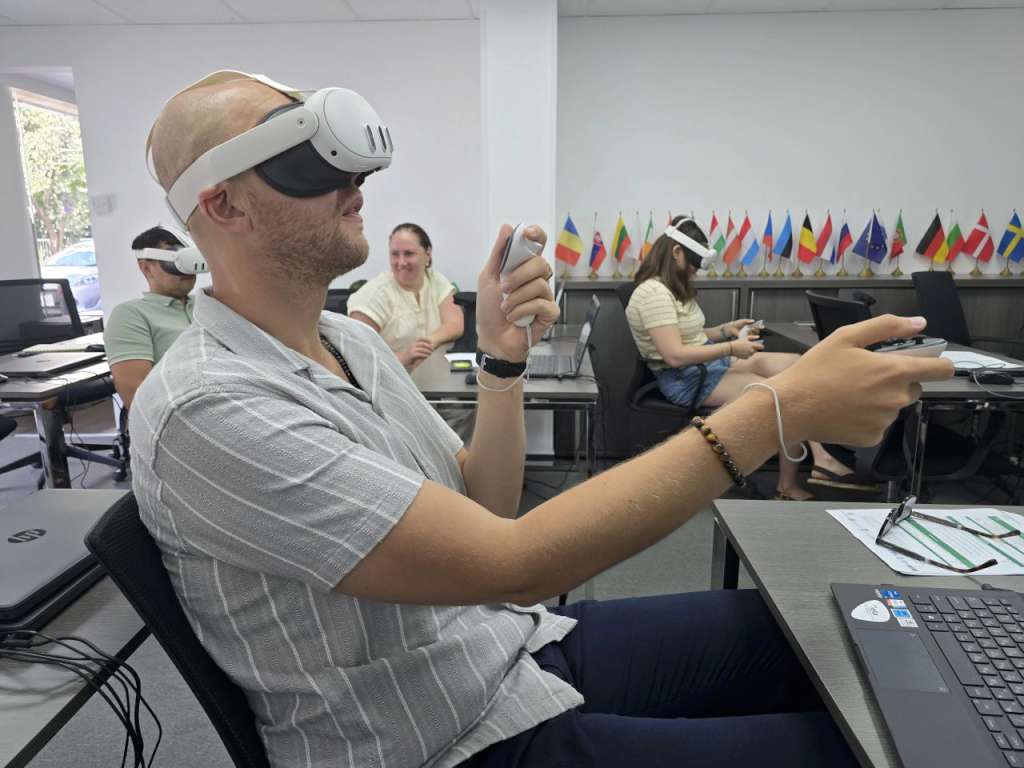
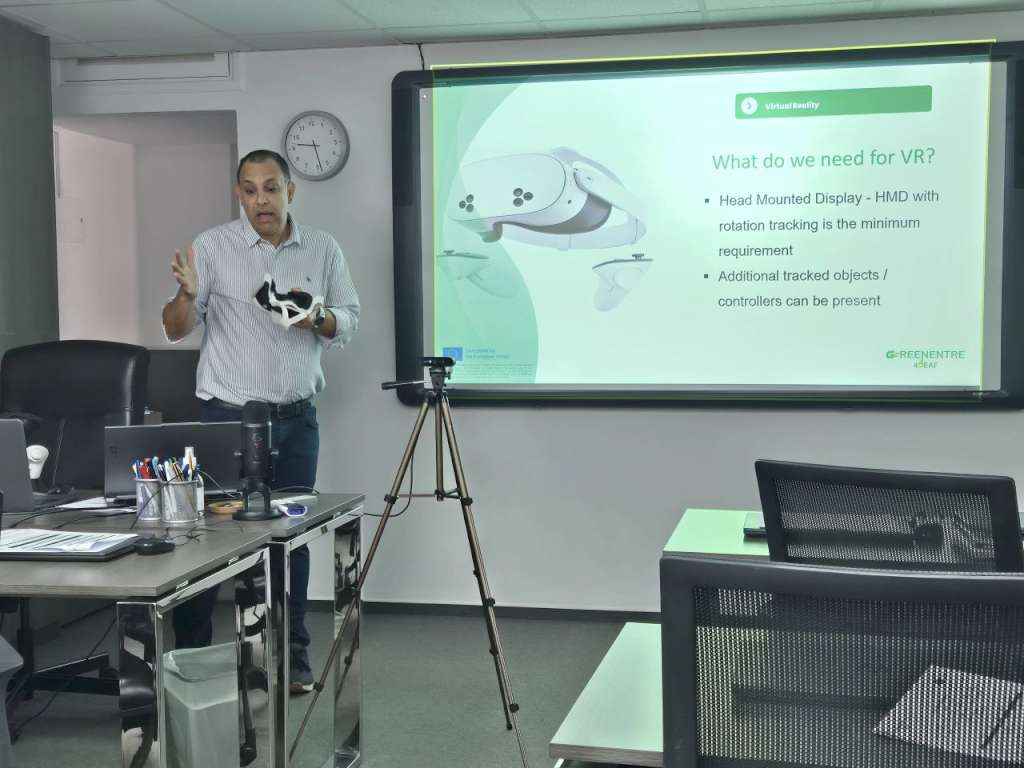
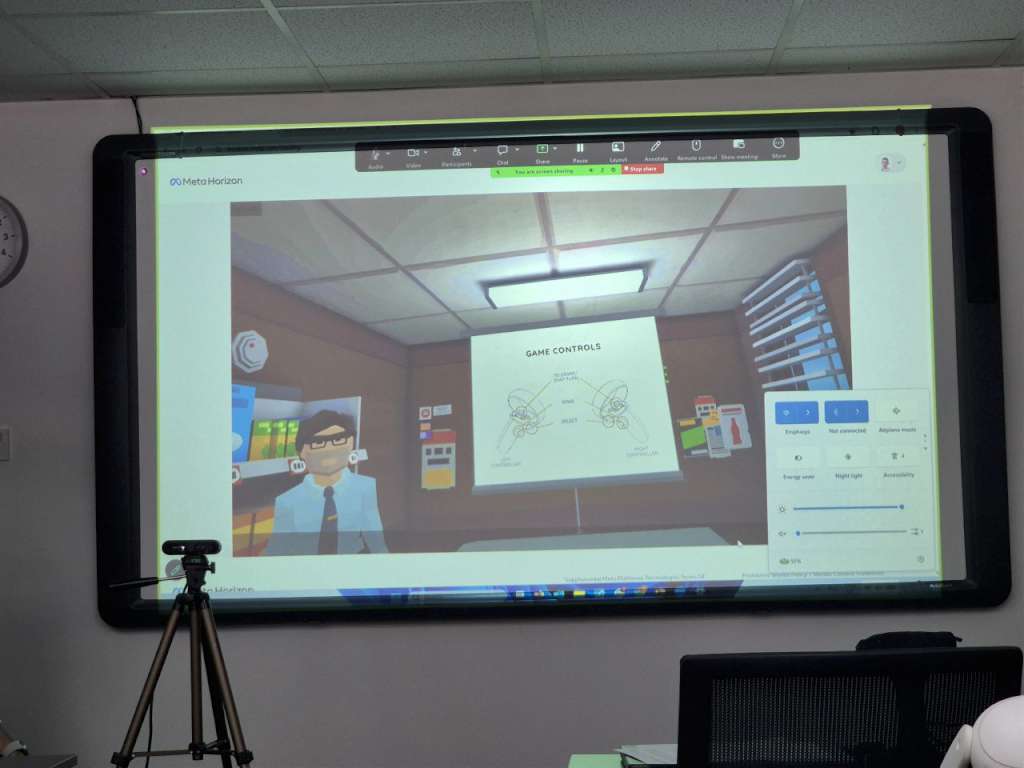
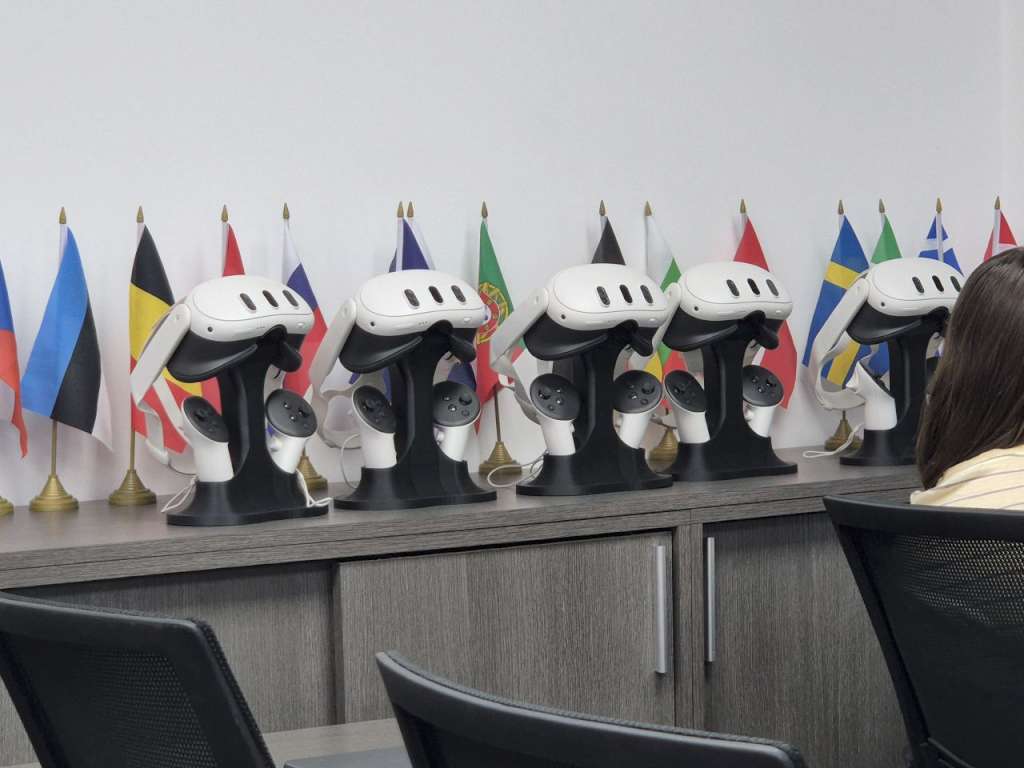
The second day of the workshop focused on innovation in education and learning for green entrepreneurship. Participants tested virtual reality (VR) simulations developed within the project, designed to help users acquire green entrepreneurship skills in an interactive and practical way. Several scenarios were available for testing, including solar panel installation, sustainable agriculture, a repair and recycling workshop, sustainability management in an office, and a zero-waste shop environment.
“Projects like this clearly demonstrate how sustainability, entrepreneurship and inclusive education can come together in a highly practical way by creating tools and content that help people develop skills and turn their ideas into reality,” emphasises Edgars Čerkovskis, representative of EKA University of Applied Sciences. “Digital technologies, sustainability and inclusive education are increasingly becoming part of an integrated ecosystem in which innovation helps reach an ever-wider section of society,” adds Čerkovskis.
 |
 |
 |
 |
 |
 |
The project “Stimulating innovative-inclusive teaching and validated lifelong learning on green entrepreneurship for deaf and hard-of-hearing people (DHH) through digital innovation in HEI – GREENENTRE4DEAF” is funded with the support of the European Commission through the Erasmus+ programme, KA220-HED “Cooperation Partnerships in Higher Education”.
Funded by the European Union. Views and opinions expressed are however those of the author(s) only and do not necessarily reflect those of the European Union or the European Education and Culture Executive Agency (EACEA). Neither the European Union nor EACEA can be held responsible for them.